
Description
Description
High-Strength Adhesive for CarbonBar Brackets Bonds to Stone, Quartz, and Itself
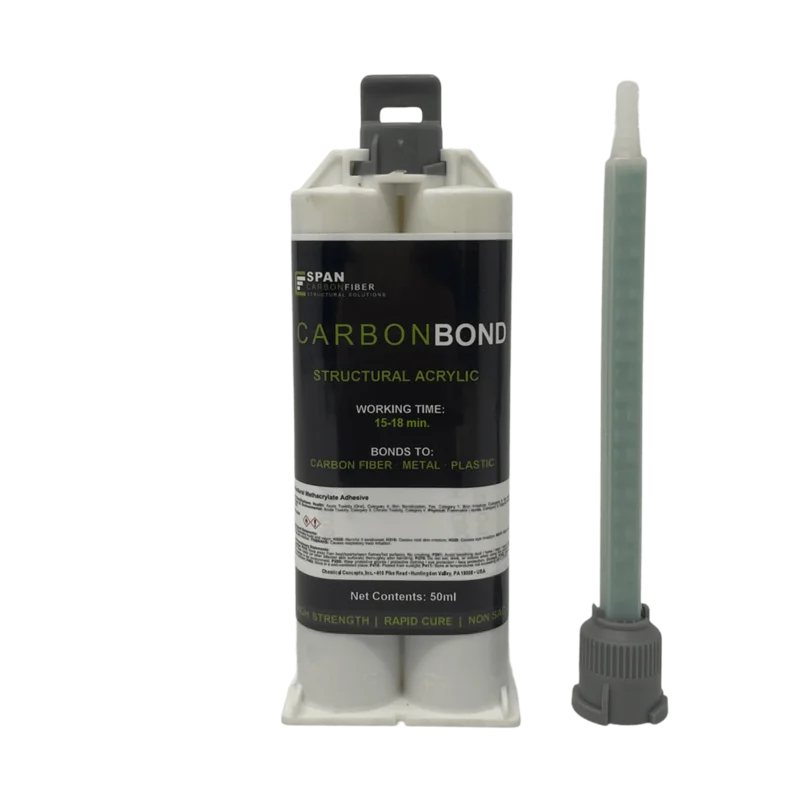
CarbonBond Structural Acrylic Adhesive Blackis a two-component, methacrylate-based structural adhesive engineered specifically for fabricators working withCarbonBar reinforcement systems. Whether bonding CarbonBar brackets to stone orlaminating CarbonBar layers togetherfor added rigidity, CarbonBond deliversweld-like strength, fast cure times, and long-term durability that outperform silicone and standard epoxies.
Trusted by professional countertop fabricators, this adhesive is purpose-built tomaximize the performance of CarbonBar systemsin overhang support, sink cutouts, and load-bearing applications. It offers strong adhesion to quartz, granite, engineered stone, and carbon fiber with minimal surface prep required.
Key Features & Benefits
-
Engineered for CarbonBar Systems
Ideal for bonding CarbonBar to stone and for CarbonBar-to-CarbonBar lamination. -
High-Strength, Structural Adhesion
Tensile strength up to 3,500 psi ensures long-term bond integrity. -
Fast-Setting for Production Efficiency
12-18 minute working time and 35-50 minute fixture time -
Gap-Filling up to 1/4
Excellent for uneven stone surfaces or layered CarbonBar assemblies. -
Outperforms Silicone and Construction Adhesives
Provides structural-grade adhesion where silicone fails ideal for permanent reinforcement. -
Minimal Surface Preparation Required
Bonds stone, carbon fiber, and metals without excessive surface preparation.
Expanded Use Cases
1. CarbonBar to Stone Bonding
- Structural adhesion of CarbonBar brackets and rods to quartz, granite, and solid surfaces.
- Common in countertop overhangs, floating vanities, and bar top reinforcement.
2. CarbonBar Lamination
- Laminates multiple CarbonBar layers together for custom reinforcement profiles.
- Ideal for building multi-ply supports or increasing stiffness in high-load areas.
3. Mixed-Material Bonding
- Reliable adhesion between carbon fiber, stainless steel, aluminum, and fiberglass.
- Supports hybrid bracket designs or custom-fabricated support systems.
Technical Specifications
| Property | Value |
|---|---|
| Mix Ratio | 1:1 (by volume or weight) |
| Working Time | 1218 minutes @ 75F (24C) |
| Fixture Time | 3550 minutes |
| Handling Strength | 5070 minutes |
| Operating Temperature Range | -60F to 250F (-50C to 120C) |
| Recommended Application Temp | 65F to 85F (18C to 30C) |
| Gap Filling | Up to 1/4 |
| Mixed Density | 8.1 lbs/gal (0.96 g/cc) |
| Flash Point | 51F (11C) |
| UV Stability | UV Stable Black |
Tensile Strength (ASTM D638):
-
Steel / Stainless Steel: 2,5003,500 psi
-
Aluminum: 2,5003,500 psi
-
Fiberglass: 2,500+ psi
-
ABS / PVC: 1,000+ psi
Why Fabricators Choose CarbonBond Over Silicone
-
Siliconeoffers a weak, flexible bond prone to peel or shift over time not suitable for structural applications.
- Construction Adhesivesoutgas and have long skin and cure times, shrinkage issues are also a concern
-
CarbonBonddelivers a rigid, vibration-resistant bond between CarbonBar and stone or CarbonBar to itself for permanent countertop reinforcement.
-
Faster cure, higher bond strength, and no primer required make it a superior choice for professional shops.
Reviews
There are no reviews yet.